

Understanding psychiatric service dog tasks is one of the most important steps a new handler can take. Tasks are the legal and functional foundation of every service dog. They separate a service dog from a pet or a Support Animal. And for handlers living with PTSD, anxiety disorders, bipolar disorder or schizophrenia, the right set of trained tasks can genuinely change daily life.
This guide walks through the most common psychiatric service dog tasks one by one. For each task, you will find a plain-language description of what it does, why it matters and a practical starting point for training it. Bring this information to your trainer, your Licensed Clinical Doctor or both.
What Makes a Task a Task
Under the Americans with Disabilities Act, a service dog must be trained to perform work or tasks that directly mitigate the handler's disability. General comfort does not count. Presence alone does not count. The task must be a specific, trainable, repeatable behavior that addresses a functional limitation caused by the disability.
That distinction matters because it affects your public access rights, your housing protections under the Fair Housing Act and your travel options under the Air Carrier Access Act. A well-documented task list protects you legally. It also gives your dog a clear job, which benefits the dog as much as it benefits you.
You do not need a dozen tasks. Most handlers do best with two to four tasks trained to a high level of reliability. Quality beats quantity every time.
Grounding and Anxiety Interruption
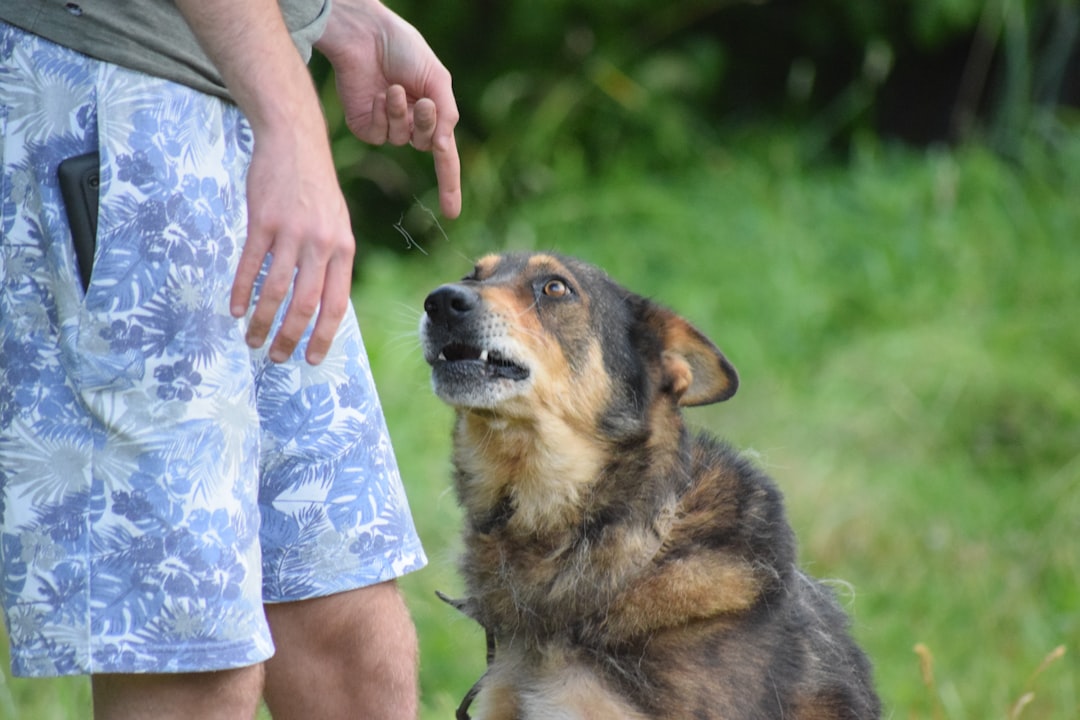
Grounding tasks interrupt panic attacks, flashbacks or dissociative episodes by bringing the handler back into the present moment through physical contact or pressure. Deep Pressure Therapy (DPT) is the most well-known version. The dog applies firm body weight to the handler's lap, chest or legs on cue.
Anxiety Interruption (AI) is a related task where the dog nudges, paws or licks the handler to break a repetitive behavior like skin-picking, rocking or hyperventilation. Both tasks work by providing physical sensation that the nervous system registers as grounding input.
Training approach: Start by teaching the dog a solid "lap" or "paws up" behavior using a lure and reward. Once the dog reliably performs the position, add duration. Then layer in a verbal or hand-signal cue. The next step is proofing the behavior under mild distraction before adding real-world context. Use a positive reinforcement model throughout. Never use pressure or correction to force body contact. The dog must offer this behavior willingly for it to remain reliable.
Learn more about how deep pressure therapy works as a trained service dog task on our dedicated resource page.
Medication Reminders
Missing psychiatric medication can trigger serious symptom escalation. A medication reminder task trains the dog to alert the handler at a specific time or in response to a specific cue, such as an alarm sound, that it is time to take medication. The dog typically nudges the handler, retrieves a medication bag or goes to a designated spot and waits until the handler responds.
Training approach: Pick one consistent alert behavior first. A nose nudge to the hand is simple and easy to reinforce. Pair that behavior with a cue word. Then pair the cue word with your alarm sound by playing the alarm, giving the cue and rewarding the nudge. Over time the alarm becomes the primary cue and the verbal cue becomes secondary. Proof across locations, times of day and handler positions. The dog should complete the alert even when the handler is asleep, distracted or in another room.
Medication reminders are one of the most commonly documented psychiatric service dog tasks in clinical settings. Our Licensed Clinical Doctors at TheraPetic® Healthcare Provider Group regularly see this task listed in handler assessments as addressing the functional limitation of impaired executive function related to mental health conditions.
Nightmare Interruption
PTSD-related nightmares disrupt sleep, elevate cortisol and increase daytime symptoms. A nightmare interruption task trains the dog to respond to distress sounds during sleep, including crying, yelling or rapid breathing, by waking the handler with a nudge or pawing behavior.
Training approach: This task is trained in stages. First, the dog must have a reliable "wake up" behavior on cue, meaning it will nudge or paw the handler until the handler responds. Second, train the dog to perform that behavior in response to an audio recording of the distress sounds you make during nightmares. Play the recording, give the wake-up cue and reward heavily. Gradually fade the verbal cue so the sound alone triggers the behavior. Proof in the sleeping environment with realistic conditions. This task takes time. Do not rush the fading stage.
For handlers working through trauma, this task pairs well with a broader PTSD support plan developed with a qualified mental health provider. See our guide on service dogs for PTSD for clinical context.

Crowd Navigation and Spatial Buffering
Handlers with PTSD, agoraphobia or paranoia-related conditions often experience hypervigilance in public spaces. Crowd navigation and spatial buffering tasks give the handler a physical buffer zone and a predictable companion in unpredictable environments.
Crowd navigation trains the dog to guide the handler through a space efficiently, staying close to the handler's left side and avoiding sudden stops or direction changes. Spatial buffering trains the dog to position itself between the handler and approaching strangers, facing outward, to reduce the sense of threat.
Training approach: Start with loose-leash walking precision before adding any buffering behavior. Once the dog heels reliably, teach a "cover" or "block" cue where the dog turns and faces away from the handler on command. Reward the dog for holding that position calmly while strangers approach. Proof in low-traffic environments first, then gradually increase foot traffic. The dog must remain neutral and non-reactive to strangers at all times. Reactivity disqualifies a dog for this task.
Under current federal guidance from the U.S. Department of Justice ADA service animal requirements, a service dog must be under control and non-aggressive in all public settings.
Dissociation Alerts
Dissociation is a disconnection from thoughts, surroundings or identity. It can be subtle, like spacing out, or severe, like losing hours of time. A dissociation alert task trains the dog to recognize behavioral changes that precede or accompany dissociation and interrupt them before the episode deepens.
Handlers often show physical signs during dissociation: slowed blinking, blank staring, changes in breathing or repeated motor behaviors. A well-trained dog can detect these signals and apply a grounding behavior, such as pawing or nudging, to re-orient the handler.
Training approach: Dissociation alert training often begins as an extension of anxiety interruption work. Train the dog to respond to specific physical cues you exhibit during episodes. Have a trusted person observe you during mild dissociative states and document your behavioral patterns. Use those patterns as training cues. This task often develops naturally in dogs that spend extensive time with their handlers, but it requires deliberate shaping to become reliable and consistent on cue.
This is one of the more nuanced psychiatric service dog tasks and may benefit from working with a certified trainer who has experience in psychiatric assistance dogs. Our owner-training guide covers how to find qualified professional support.
Building a Task Plan That Works
Choose tasks based on your actual functional limitations. Do not pick tasks because they sound impressive. Pick tasks that solve real daily problems. A good task plan starts with your Licensed Clinical Doctor identifying the specific ways your disability limits your functioning. That documentation connects your tasks to your diagnosis in a legally meaningful way.
Train one task at a time to fluency before adding the next. Fluency means the dog performs the task correctly at least 80 percent of the time across different environments without extra prompting. Build slowly. Consistent repetition in short sessions, five to ten minutes per day, produces better results than marathon training days once a week.
Keep a training log. Date each session, note the environment, record the success rate and note any problems. That log becomes a record of your dog's training history, which supports your legitimacy as a handler team if you are ever questioned.
Getting Started With Support
TheraPetic® Healthcare Provider Group is a 501(c)(3) nonprofit dedicated to connecting people with disabilities to clinically sound support animal evaluations and education. Our mission is to make this process accessible, honest and grounded in real clinical practice.
If you are ready to document your need for a psychiatric service dog or want to speak with one of our Licensed Clinical Doctors about your qualifying condition, start with our screening process. You can also reach our team directly at help@mypsd.org or by calling (800) 851-4390.
Psychiatric service dog tasks are trainable. With the right plan, the right dog and the right clinical support, they can meaningfully reduce the daily burden of living with a psychiatric disability. Start with one task. Train it well. Build from there.
Written By
Ryan Gaughan, BA, CSDT #6202 , Executive Director
TheraPetic® Healthcare Provider Group • About • LinkedIn • ryanjgaughan.com
Clinically Reviewed By
Dr. Patrick Fisher, PhD, NCC , Founder & Clinical Director • The Service Animal Expert™
Editorial Review
This article was reviewed by Dr. Patrick Fisher, PhD, NCC on September 9, 2026 for accuracy, currency, and clarity. Content is updated when laws or guidance change.