

Psychiatric service dog tasks are the foundation of everything a Psychiatric Service Dog does. Under the Americans with Disabilities Act, a dog qualifies as a service dog only if it performs specific, trained tasks that directly mitigate a handler's disability. Knowing exactly which psychiatric service dog tasks fit your diagnosis is the first step toward building a working team that genuinely changes your daily life.
This guide covers the most clinically relevant tasks handlers rely on in 2026, with a plain-language breakdown of how each one is trained. Whether you are starting from scratch or adding skills to a dog already in training, use this as your reference point.
What Makes a Task a Task
A task is a discrete, trained behavior the dog performs on cue or in response to a specific trigger. It is not the dog's calm temperament. It is not the comfort you feel just having the dog nearby. Those things are real and valuable, but they do not meet the legal definition under the ADA.
A psychiatric task must have three qualities. It must be trained intentionally. It must be linked to a specific symptom or functional limitation caused by your disability. It must reduce that limitation in a measurable way.
If your dog does something naturally that helps you, that behavior still needs to be shaped, put on cue and made reliable before it counts as a task. Reliability is what separates a working dog from a well-behaved pet.
Grounding Tasks
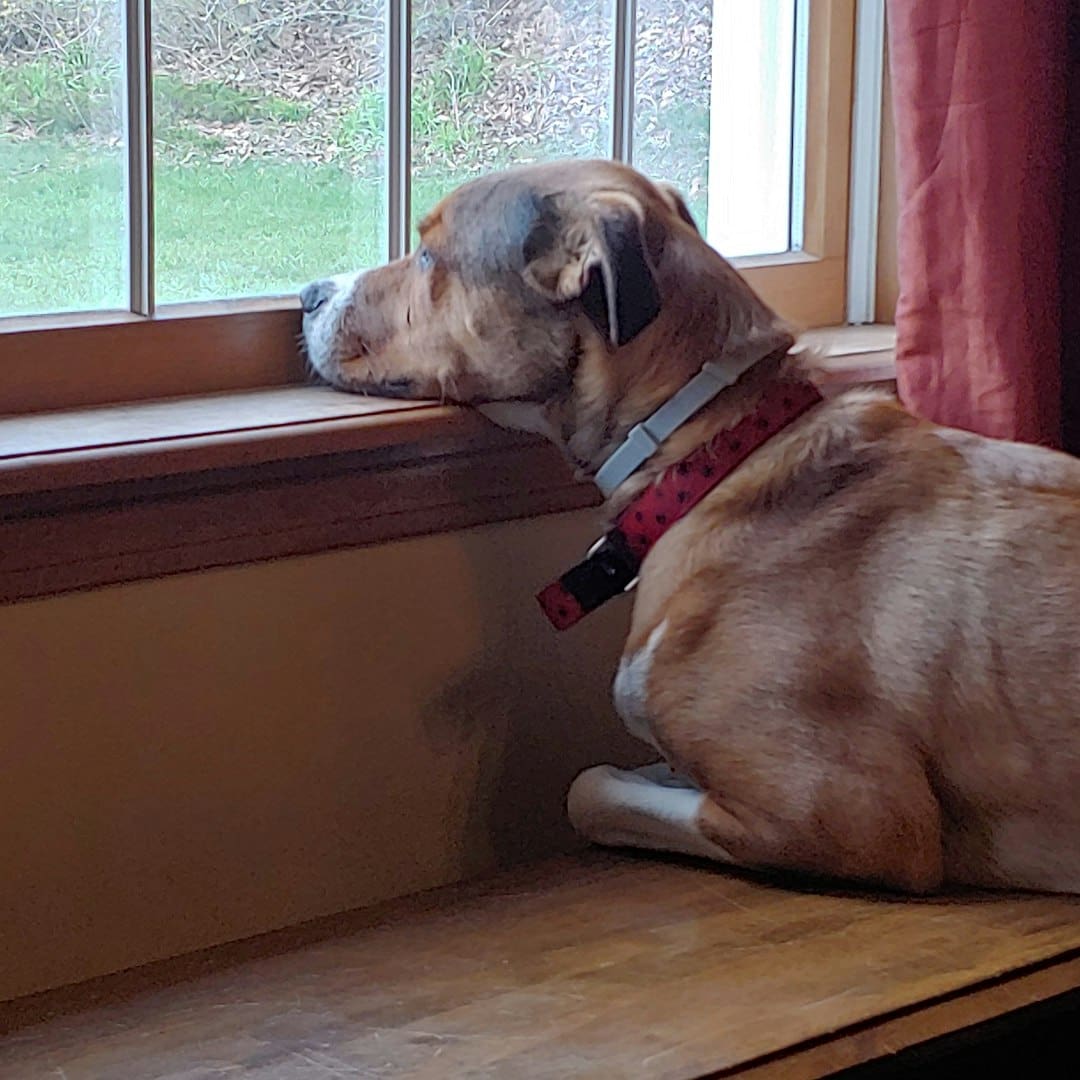
Grounding tasks interrupt panic attacks, flashbacks and dissociative episodes by redirecting the handler's sensory focus back to the present moment. These are among the most requested psychiatric service dog tasks for handlers living with PTSD, panic disorder or complex trauma.
Deep Pressure Therapy (DPT)
The dog applies physical pressure to the handler's body on cue. Most commonly the dog places its full weight across the handler's lap, chest or legs. This activates the parasympathetic nervous system and can reduce acute anxiety responses.
How to train it: Start with "lap" or "chest" as a cue. Lure the dog onto you in a sitting or lying position. Mark the moment full contact is made. Hold the pressure for a count and reward duration, not just the initial placement. Practice in real stress contexts once the behavior is solid at home.
Tactile Grounding
The dog nudges, licks or paws the handler on cue or in response to observed distress behavior. Smaller dogs who cannot do DPT often use this instead.
How to train it: Teach "touch" using a target stick or your hand as the target. Transfer the target to your face or hand. Shape the nudge to be firm enough to register during dissociation. Build in duration so the dog keeps engaging until released.
Medication Reminders
Missing psychiatric medication is a real functional limitation for many handlers. Depression, ADHD and psychotic spectrum conditions can all impair the routine behaviors needed to stay on a medication schedule. A medication reminder task closes that gap.
How to train it: Set an alarm on your phone or a smart speaker at your regular medication time. Train the dog to perform a specific behavior, typically a persistent nose poke to your hand or leg, on cue at the alarm sound. Mark and reward the nose poke. Then teach the dog to keep offering the behavior until you stand and walk to your medication. The key is duration and persistence. The dog must not stop until the handler responds physically.
Do not accept a single nudge and done. Train the dog to reapproach and repeat the alert every 30 to 60 seconds until you move. That persistence is what makes the task functional rather than decorative.
Nightmare Interruption
Nightmare interruption is one of the most life-changing psychiatric service dog tasks for handlers with PTSD. Night terrors disrupt sleep, degrade daily functioning and can escalate into full dissociative episodes on waking. A dog trained to interrupt them shortens the episode and brings the handler back to awareness faster.
How to train it: This task is built in two layers. First, train a "wake up" cue the dog performs on command. Use DPT, licking or pawing to rouse you. Practice this deliberately during the day so the behavior is solid and clear.
Second, condition the dog to respond to nighttime distress sounds. Train the dog to approach and perform the wake-up behavior when it hears vocalizations, thrashing or rapid breathing that signal a nightmare. Record your own distress sounds if needed and play them at low volume to shape the response. Reward any orientation toward the sound at first. Build toward a full approach and contact behavior.
This task requires a dog with a calm, confident temperament who does not startle at sudden movement. Vet your dog's reaction to nighttime disturbance before investing heavy training time here.
Crowd Navigation and Space Buffering
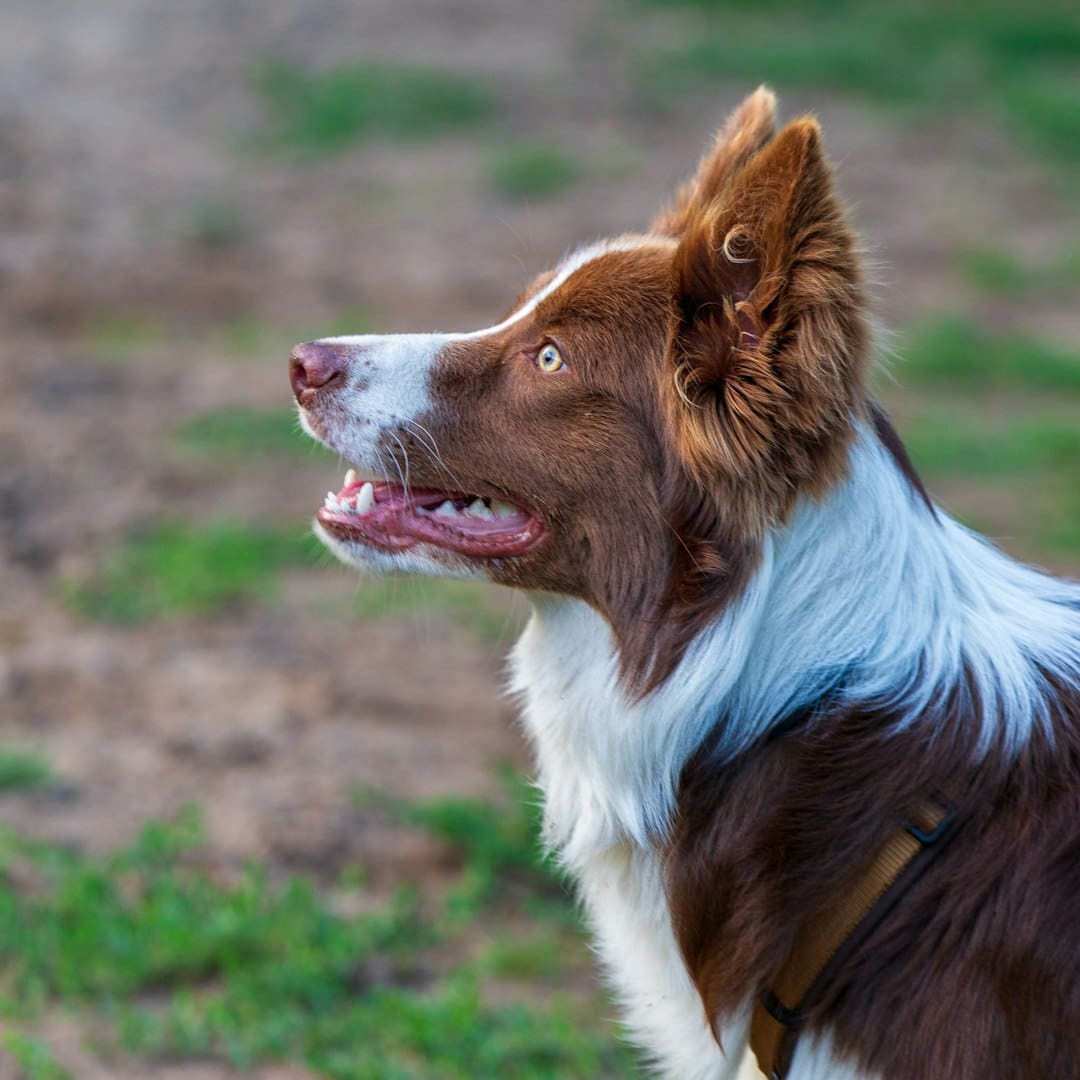
Handlers with PTSD, agoraphobia or sensory processing disorders often struggle with crowded public spaces. Psychiatric service dog tasks in this category create physical and psychological space between the handler and others.
Crowd Navigation
The dog walks in front of the handler in a "blocking" position, creating a physical barrier that parts foot traffic and prevents people from walking directly toward the handler's face.
How to train it: Teach a "front" or "block" position where the dog faces away from you and sits or stands between you and anyone approaching. Use targeting to shape the position. Practice in low-traffic areas first. Gradually introduce more people. Reward the dog for holding the position calmly as people pass.
Perimeter Work
In seated environments like restaurants or waiting rooms, the dog can be positioned to cover the handler's back or scan entries. Train the dog to lie behind your chair and orient toward foot traffic, alerting with a specific signal like standing up or making contact when someone enters the handler's space.
Dissociation Alerts
Dissociation often has physical tells the handler cannot perceive in themselves. Dogs, however, can learn to read those behavioral cues and respond before the episode fully sets in. This is one of the more advanced psychiatric service dog tasks because the trigger is behavioral rather than a cue from the handler.
Common pre-dissociation behaviors include slowed blink rate, staring, repetitive self-touching and shallow breathing. A dog can be shaped to alert when it observes these patterns.
How to train it: Work with a trainer to identify your specific pre-dissociation behaviors. Simulate those behaviors deliberately during sessions. Reward the dog for orienting toward you when you perform them. Shape that orientation into a full alert, nose poke, paw touch or DPT. The dog must perform the alert without a verbal cue from you, which is what makes this task genuinely functional.
This task takes time. Expect three to six months of consistent sessions before it is reliable. Do not rush it. An unreliable alert is worse than no alert because it creates false security.
Other High-Value Psychiatric Tasks
The tasks above are the most common, but psychiatric service dog tasks extend further depending on the handler's diagnosis and functional limitations.
Room clearing: The dog checks each room of a home on command before the handler enters, reducing hypervigilance behaviors tied to PTSD. Train by sending the dog into a room with a "clear" cue and teaching it to return to you as the all-clear signal.
Suicide interruption: For handlers with severe depression or suicidal ideation, some dogs are trained to interrupt self-harm behaviors or retrieve a phone to prompt help-seeking. This task requires advanced training and a solid foundation in all other tasks first. Consult a certified trainer with clinical experience before pursuing it.
Guide away from triggers: The dog learns to recognize environmental triggers, raised voices, specific locations and guides the handler away on cue or automatically. Build this on a solid "let's go" heel with directional control.
For a broader look at how these tasks connect to your handler rights in public, visit our public access rights guide.
Getting Your Dog Task Trained
Task training is cumulative. Master one task fully before adding another. A dog with three reliable tasks is more valuable than a dog with seven shaky ones. Reliability under distraction and stress is the standard.
Start with the task that addresses your most disabling symptom first. That is the task you will practice most often in real-world conditions, which accelerates learning for both you and your dog.
Handlers who need professional guidance on pairing the right tasks to their diagnosis can start with our Service Dog handler screening to clarify which functional limitations your dog should be trained to address. Matching tasks to documented limitations also supports the clinical documentation process.
Under the Fair Housing Act and the ADA, your dog does not need to be trained by a professional. Owner-training is fully legal. What the law requires is that the tasks are real, reliable and directly tied to your disability. Keep training records. Document each task with video. That documentation protects you if your dog's status is ever questioned.
At TheraPetic® Healthcare Provider Group, a 501(c)(3) nonprofit, our Licensed Clinical Doctors work directly with handlers to identify which psychiatric service dog tasks align with their clinical diagnosis and functional limitations. That clinical grounding ensures your task list holds up under scrutiny, both legally and medically.
If you are ready to take the next step, our clinical team is available at go.mypsd.org or by phone at (800) 851-4390. You can also reach us at help@mypsd.org.
You can also explore the ADA's official service animal guidance for the federal legal framework that governs psychiatric service dog access rights.
Want to go deeper on the overlap between task training and your legal protections in housing? Read our guide on Psychiatric Service Dog housing rights for a full breakdown of what documentation landlords can and cannot request.
Written By
Ryan Gaughan, BA, CSDT #6202 — Executive Director
TheraPetic® Healthcare Provider Group • About • LinkedIn • ryanjgaughan.com
Clinically Reviewed By
Dr. Patrick Fisher, PhD, NCC — Founder & Clinical Director • The Service Animal Expert™
Editorial Review
This article was reviewed by Dr. Patrick Fisher, PhD, NCC on July 29, 2026 for accuracy, currency, and clarity. Content is updated when laws or guidance change.