

The Breed Myth You Need to Drop
When handlers ask about psychiatric service dog breeds, the first names that come up are always Golden Retrievers and Labrador Retrievers. Those are solid dogs. But the idea that psychiatric service dog breeds must come from a short approved list is one of the most damaging myths in service dog training.
Breed tells you probabilities. Individual temperament tells you truth. A flat-coated retriever from excellent working lines can flame out at 18 months because it carries too much environmental sensitivity. A Standard Poodle from a litter nobody planned can become a flawless psychiatric service dog because the individual dog has the right foundation.
Stop shopping for a breed. Start evaluating dogs. That shift in thinking changes everything.
Four Traits That Actually Matter
After working alongside handlers and their dogs through psychiatric service dog training, four traits surface as the true predictors of success. These are not breed-specific. They are individual-specific.
The four traits are handler focus, emotional sensitivity, public composure and trainability. Every evaluation method worth using circles back to these four. If a dog scores low on any one of them, the path to reliable service dog work becomes very hard, sometimes impossible.
Breed tendencies can hint at which dogs are more likely to carry these traits. That is the only honest use of breed data in this process.

Handler Focus: The Non-Negotiable Trait
Handler focus means the dog chooses to orient toward you in distracting environments. Not because you forced it. Because the dog finds you more interesting than almost everything else.
Watch a dog in a new space with mild distractions. Does it check back with you regularly without being called? That check-in behavior is handler focus in its early form. A dog that vacuums the floor, investigates every stranger and forgets you exist is not showing handler focus, no matter how friendly it looks.
This trait matters most during a psychiatric crisis. When a handler is dissociating, experiencing a panic attack or struggling to communicate, the dog must stay tuned to the handler without prompting. A dog that requires constant cues to re-engage is a liability in those moments, not a support.
Test for this early. Put the dog in a mildly novel environment. Step back. Count check-ins over five minutes. High-focus dogs check back often. Low-focus dogs wander. Do not excuse low check-in behavior because the dog is young or the environment is exciting. That pattern reflects deeper wiring.
Visit our psychiatric service dog task training guide to see how handler focus underpins every trained task from deep pressure therapy to alerting.
Emotional Sensitivity and Why It Cuts Both Ways
Emotional sensitivity is the dog's ability to read and respond to human emotional states. For psychiatric service dog work, this trait is genuinely powerful. A dog that notices your breathing change, your posture shift or your affect flatten before you consciously register distress can alert early and interrupt escalating episodes.
The catch is that sensitivity exists on a spectrum. A dog that is too sensitive can absorb handler distress and become dysregulated itself. Our clinical team has observed this pattern repeatedly: a highly sensitive dog placed with a handler who experiences frequent acute episodes can develop anxiety behaviors within months. The dog starts shutting down in public, refusing tasks or pacing at home.
You want a dog that reads emotions clearly but does not fuse with them. The clinical term for this is "emotional resilience with attunement." In plain language, the dog notices, the dog responds, the dog does not spiral.
Test sensitivity by slightly changing your affect during an interaction. Sit down, drop your shoulders, go quiet and look away. A sensitive dog will approach you, make contact and try to re-engage you. A low-sensitivity dog will keep doing whatever it was doing. An over-sensitive dog may look worried or start stress panting. You want the middle response: calm, curious, connected.
Public Composure Under Real-World Pressure
A psychiatric service dog spends significant time in public environments under the Air Carrier Access Act, the Americans with Disabilities Act and fair housing protections. That means buses, emergency rooms, grocery stores, crowded airports and loud restaurants. Public composure is not optional.
Public composure means the dog can maintain a neutral, calm baseline in high-stimulation environments without requiring constant handler management. A dog that requires heavy correction, non-stop treat delivery or physical restraint to hold a down-stay in a busy waiting room is not ready for public access work.
Watch for the specific triggers that break composure. Some dogs handle crowds but collapse around other dogs. Some handle noise but not fast movement. Triggers are trainable sometimes, but a dog with pervasive environmental reactivity is not a good service dog candidate regardless of breed.
The public access test used by many organizations evaluates exactly this: can the dog ignore distractions, hold positions, move calmly through spaces and recover quickly from startles? Run informal versions of this test before committing to a dog. Take the dog to a hardware store. Walk it near a school at dismissal time. Watch what happens when a shopping cart rattles past suddenly.
Learn more about public access rights and standards for service dogs so you understand what composure the law implicitly requires.
Trainability Is Not Just Smartness
People confuse trainability with intelligence. They are not the same thing. A Border Collie is among the most intelligent dogs alive. Border Collies also have high arousal ceilings, strong predatory drift and body-sensitivity that can make public psychiatric service dog work genuinely difficult.
Trainability in a service dog context means the dog finds working with you reinforcing, recovers quickly from mistakes, generalizes learned behaviors to new environments and does not shut down under training pressure.
Generalization is the piece most new handlers underestimate. A dog that performs a deep pressure therapy task perfectly in your living room but freezes in a clinic hallway has not generalized. Psychiatric service dog tasks must work in unfamiliar, stressful environments because that is exactly when you need them most.
High trainability dogs show four markers: they engage voluntarily with training sessions, they offer learned behaviors spontaneously when they sense handler need, they adapt quickly when the environment changes and they maintain task reliability across weeks without daily drilling.
Low trainability is not a character flaw in a dog. Many wonderful pets have low trainability. They are simply not built for the demands of service work. Recognize that early and spare both the dog and yourself years of frustration.
Breed Tendencies Worth Knowing
Breed tendencies are real. They are just not destiny. Here is an honest breakdown of commonly chosen psychiatric service dog breeds and what the tendencies look like in practice.
Golden Retrievers and Labrador Retrievers
These breeds have been selectively bred for handler focus and biddability for decades. The working lines carry strong food and play drive, which makes them highly trainable. The risk is that show lines have been diluted and some individuals carry excessive social arousal toward strangers. Evaluate individual dogs, not just pedigree papers.
Standard Poodles
Standard Poodles are consistently underrated in psychiatric service dog work. They carry high intelligence, low shedding and a calm demeanor that holds well in public. Their sensitivity level is high, which is an asset with proper matching. A Standard Poodle placed with the right handler can perform nuanced interruption and grounding tasks with minimal cuing.
German Shepherd Dogs
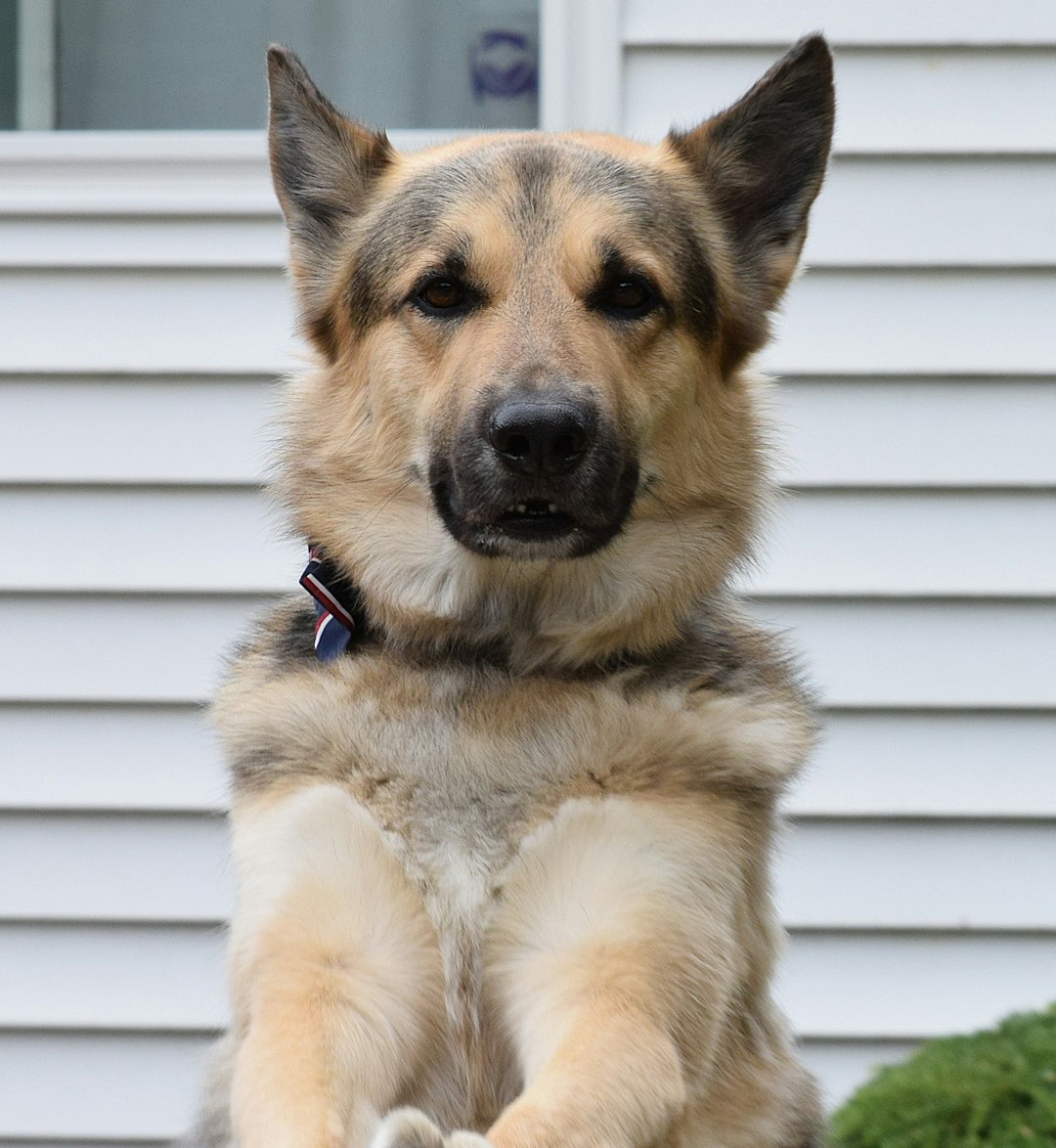
German Shepherds bring intense handler loyalty and strong work ethic. The risk is environmental reactivity in dogs without solid early socialization. Working-line German Shepherds can also carry high arousal that requires experienced handling. In the right hands with the right individual dog, a German Shepherd can be a commanding psychiatric service dog. In inexperienced hands, the same dog can become difficult in public.
Mixed-Breed Dogs
Do not dismiss mixed-breed dogs. Hybrid vigor is real. Many mixed-breed dogs carry excellent temperament combinations with fewer breed-specific exaggerations. Evaluate on temperament, health screening and individual assessment. A Labrador-Poodle mix from a rescue that scores well on all four core traits is a far better candidate than a purebred Golden Retriever that fails handler focus testing.
How to Evaluate an Individual Dog
Use a structured evaluation, not a gut feeling. The Volhard Puppy Aptitude Test was developed for working dog selection and remains a useful starting framework. Look for middle scores on most subtests. Extremes in either direction, either very dominant or very submissive, tend to produce difficult service dog candidates.
For adult dogs, spend at least two extended sessions in different environments before deciding. Observe the four core traits in each session. Ask breeders or rescue staff for behavioral history, especially around resource guarding, noise sensitivity and recovery from startles.
Health evaluations are not optional. Hip and elbow scoring, cardiac screening and eye certifications matter because a dog that develops chronic pain mid-career may develop anxiety-based reactivity that breaks public composure. Get the health clearances before you invest in training.
Read our owner-training guide for psychiatric service dogs to understand how individual evaluation connects to the full training roadmap.
If you are evaluating a puppy specifically, our puppy selection resource walks through age-appropriate temperament testing in detail.
Your Next Steps Toward the Right Match
Start with clarity about your specific psychiatric disability and the tasks you need. Psychiatric service dog tasks vary widely, from deep pressure therapy during panic attacks to room-clearance for PTSD hypervigilance to medication reminders for depression and bipolar disorder. The task set shapes the temperament profile you should prioritize.
Work with a credentialed evaluator if possible. Many handlers make costly breed choices based on appearance or brand recognition. An evaluator with hands-on service dog experience can run structured assessments and give you an honest read on a specific dog's potential.
As a 501(c)(3) nonprofit healthcare provider, TheraPetic® Healthcare Provider Group exists to make psychiatric service dog access real for people who need it most, not to move product or push specific breeds. Our Licensed Clinical Doctors evaluate handlers for clinical need and provide documentation that supports the training process from the right starting point.
If you are ready to begin, connect with our clinical team at go.mypsd.org or reach us directly at (800) 851-4390. The right dog for you exists. Finding it starts with knowing what to look for.
Written By
Ryan Gaughan, BA, CSDT #6202 , Executive Director
TheraPetic® Healthcare Provider Group • About • LinkedIn • ryanjgaughan.com
Clinically Reviewed By
Dr. Patrick Fisher, PhD, NCC , Founder & Clinical Director • The Service Animal Expert™
Editorial Review
This article was reviewed by Dr. Patrick Fisher, PhD, NCC on October 21, 2026 for accuracy, currency, and clarity. Content is updated when laws or guidance change.