

What Spatial Support Actually Means
Spatial support is one of the most practical task categories a psychiatric service dog can perform. It covers any trained behavior where the dog uses its body to manage the physical space around its handler. That includes blocking strangers from getting too close, covering the handler's back in exposed environments, and guiding the handler through or away from crowded areas.
These are not tricks. They are discrete, trained behaviors that directly mitigate a diagnosed disability. Under the Americans with Disabilities Act, a service dog must perform work or tasks directly related to the handler's disability. Spatial support tasks meet that standard when properly trained and tied to a documented condition such as PTSD, panic disorder, or agoraphobia.
In our experience working with handlers at TheraPetic® Healthcare Provider Group, spatial tasks are among the most requested and most misunderstood. Handlers often try to teach them too early or skip the foundational body-awareness work the dog needs first.
Who Benefits From Blocking and Guiding Tasks
Handlers with PTSD frequently report hypervigilance in public spaces. Crowds trigger threat-scanning, elevated heart rate, and the urge to flee. When a trained dog creates a physical buffer between the handler and strangers, it reduces the sensory overload that drives those responses.
Handlers with panic disorder or agoraphobia face similar challenges. The physical presence of an unknown person within arm's reach can trigger a full panic response. A dog positioned in front of the handler, facing outward, creates a natural boundary that most people instinctively respect. That few feet of space can mean the difference between completing a necessary errand and leaving the store in crisis.
Spatial tasks are also valuable for handlers with dissociative symptoms. Guiding behaviors, where the dog moves deliberately ahead of or alongside the handler, can serve as a grounding anchor during dissociative episodes. The dog's weight, movement, and directional pull are concrete physical sensations that help reorient the handler to the present moment.
If you are working with a handler who has these needs, connect with a Licensed Clinical Doctor to confirm that spatial support tasks are clinically appropriate and tied to specific symptoms. TheraPetic® works with handlers to ensure their service dog qualification screening accurately reflects the tasks their dog performs.
Foundation Skills Before You Start
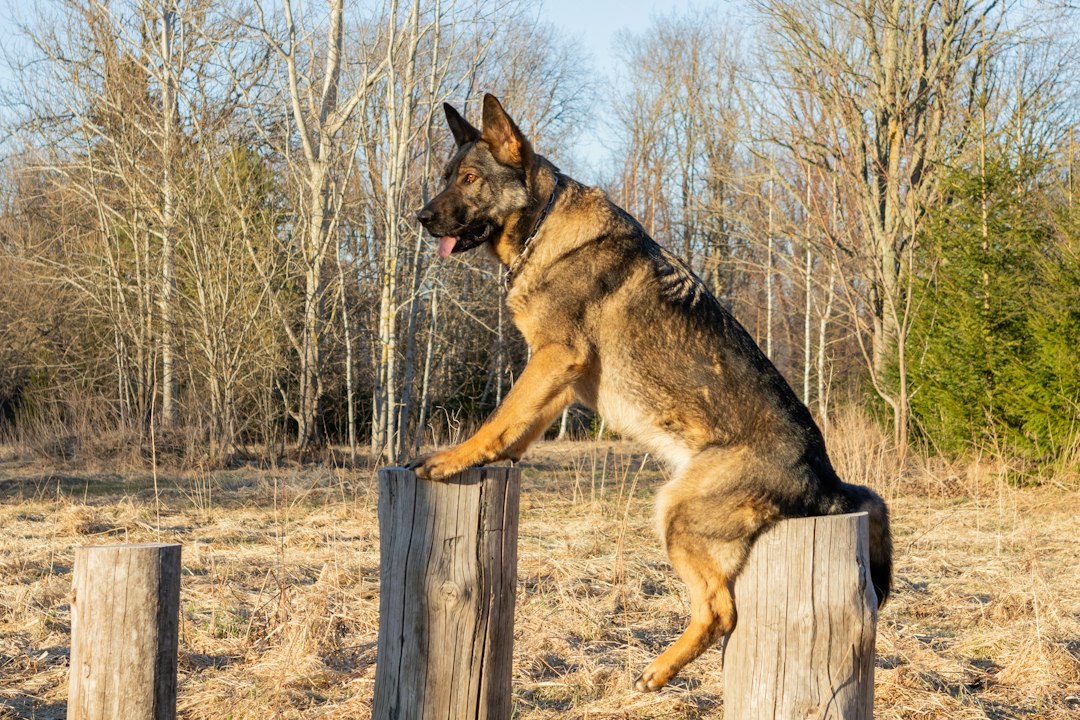
Do not attempt to teach blocking or guiding until the dog has reliable obedience in distracting environments. At minimum, the dog needs a solid heel, a durable "stay" under distraction, and excellent body awareness. Body awareness exercises, like pivoting on a platform, backing up on cue, and two-on/two-off target work, teach the dog to think about where its feet and hindquarters are. That matters enormously for clean spatial positioning.
The dog also needs a neutral, calm response to strangers approaching. If the dog is reactive, fearful, or overly social with unfamiliar people, spatial task training will be inconsistent at best and dangerous at worst. A dog that solicits petting from strangers while positioned in a block destroys the task entirely. Address temperament and socialization thoroughly before layering on spatial work.
Practice stationing first. A station is any designated spot, a mat, a heel position, a target, where the dog remains calmly until released. Stationing builds the mental stamina the dog will need to hold a block position for extended periods in busy environments.
Teaching the Block Position
Start in a quiet room with no distractions. Stand still and lure the dog into a position directly in front of you, facing away from you and toward the room. The dog's back should be near your knees or lower thighs. Mark and reward the moment the dog settles into that outward-facing stance.
Give it a clean cue word. "Block" or "front" work well. Keep it short and consistent. Repeat until the dog is moving into position promptly on the verbal cue alone without a lure.
Next, add duration. Ask the dog to hold the block position for five seconds before rewarding. Extend gradually to thirty seconds, then two minutes. The dog must remain calm and still, not spinning back to look at you or shifting out of position to investigate the room.
Now add the approach. Have a helper walk toward you from across the room at a normal pace. Your job is to remain still and let the dog work. If the dog holds position as the helper approaches to within a few feet and then stops, reward immediately. If the dog breaks position, the helper backs away, you reset, and you try again with a slower approach.
Build up to closer approaches, faster approaches, and eventually people walking past rather than stopping. Proof the behavior against distractions like shopping bags, children, hats, and umbrellas. Real crowds include all of those.
Once the dog is reliably holding a block position in your training space, move to low-traffic public areas. A quiet hallway, an empty lobby, a parking garage at off-peak hours. Gradually increase the human traffic over multiple sessions. Do not rush this phase. Each new environment is a new challenge and the dog needs to generalize the task, not just perform it at home.
Learn more about how task training connects to service dog access rights in our guide on service dog tasks and disability mitigation.
Cover and Rear Guard Positions
Cover is the companion behavior to block. Where block places the dog in front of the handler facing outward, cover places the dog behind the handler facing outward. This protects the handler's rear and flanks in situations where the threat of approach comes from multiple directions.
Teach cover the same way you taught block. Use a lure to position the dog directly behind you, facing away. Mark and reward the outward-facing stance. Add duration. Add approach proofing from the rear. Some handlers use a target stick placed behind them to help the dog find the position cleanly. That is a legitimate training aid, and you should fade it as soon as the dog understands the behavior.
A more advanced variation is a dual position hold. The dog shifts fluidly between block and cover as the handler moves through a space. This requires excellent handler communication and a dog with strong positional drive. Do not rush into this. Most handlers using spatial support tasks need only a reliable block or cover, not both simultaneously.
Guiding is a separate but related behavior. A guide task involves the dog moving the handler in a specific direction on cue, typically toward an exit or a designated safe space. Train this by teaching the dog to target a specific object or person, such as a door handle or a family member, and then cuing movement toward that target. The dog leads, the handler follows on a loose leash. This is distinct from pressure pulling, which is a different task with its own training protocol.
Proofing Spatial Tasks in Real Crowds
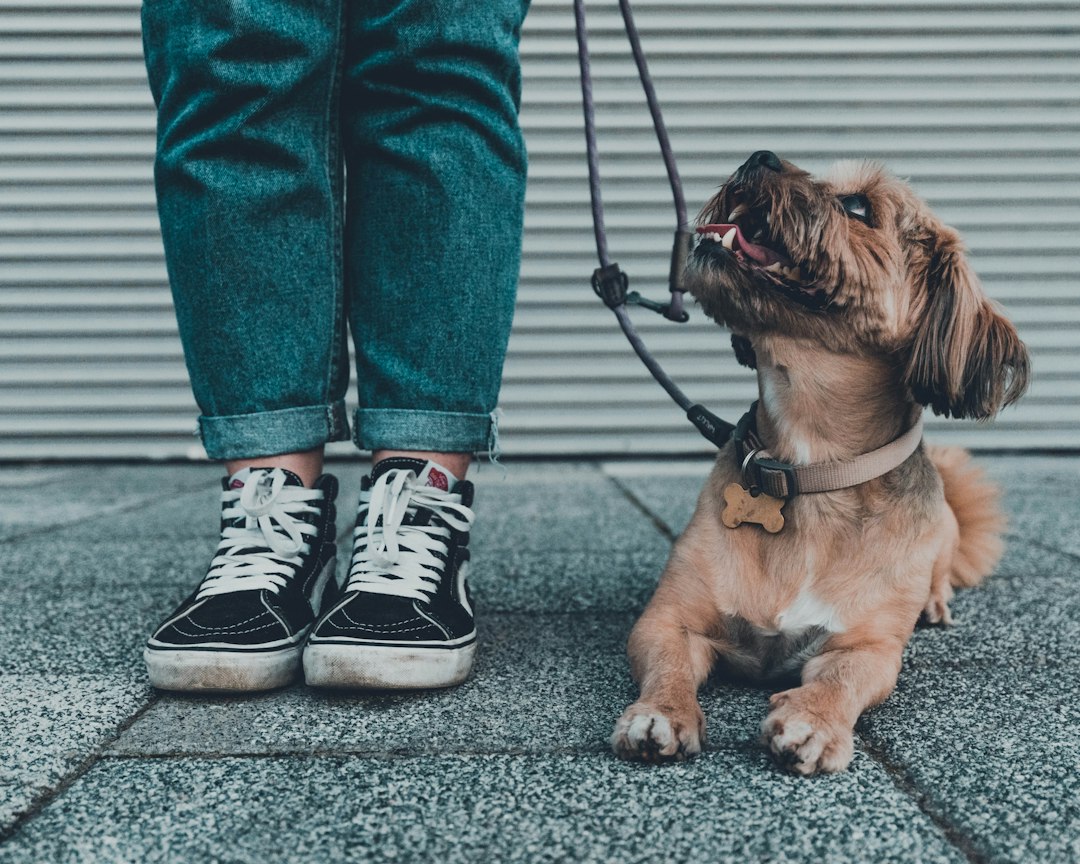
Proofing in real crowds requires a plan. Go in with a specific goal for each session. Not "practice blocking in a busy place" but "hold a block position through three stranger walk-bys at the grocery store entrance." Measurable goals give you data on whether the dog is ready to move forward.
Choose your entry point carefully. A grocery store at 7 a.m. is very different from the same store at noon on a Saturday. Start at the quieter time. As the dog succeeds, shift your sessions to busier conditions incrementally.
Watch for stress signals in the dog. Yawning, lip licking, ear pinning, and losing focus on position are signs the dog is over threshold. When you see those signals, end the session on a small success and leave. Pushing a stressed dog through a training session does not build resilience. It erodes the dog's confidence and weakens the behavior.
Carry high-value rewards into every public session. The real world is full of competing reinforcers, smells, sounds, dropped food, and other animals. Your reward needs to be worth the dog's focus. Use real meat, cheese, or whatever your dog finds most motivating. Keep sessions short and end strong.
For a broader look at how service dogs are trained to perform psychiatric tasks, our psychiatric service dog task training overview gives a strong foundation for handlers just starting out.
Common Handler Mistakes That Undermine Training
The most common mistake is cuing the dog too late. Block needs to be on the dog before the crowd closes in, not after the handler is already overwhelmed. Teach yourself to read your environment and cue the dog early. Practice this as deliberately as you practice the dog's positioning.
The second mistake is releasing the dog too soon. Handlers feel awkward holding a block position at a checkout line because they worry about people's reactions. That discomfort causes them to release the dog before the task is done. The dog learns that blocking is temporary and optional. Hold the position. Release on your schedule, not because someone stared.
The third mistake is inconsistent cues. If you say "block" sometimes and "front" other times, or if your body language changes based on your mood, the dog cannot predict what you want. Pick one cue and use it every single time without variation.
Do not use blocking as a correction tool for a dog that is pulling toward people. Those are two different problems. Blocking is a trained task. Leash manners are foundational obedience. Conflating them creates confusion and weakens both behaviors.
Legal Context and Documentation
Under the Fair Housing Act, service dogs performing spatial support tasks are covered when the handler has a documented disability and the tasks are tied directly to that disability. The same applies to Air Carrier Access Act protections for air travel. Know the law before you fly or navigate a housing dispute.
Businesses covered by the ADA may ask two questions: whether the dog is a service dog required because of a disability, and what work or task the dog is trained to perform. "My dog creates a buffer in crowded spaces and blocks strangers from approaching" is a clear, accurate answer. Practice saying it aloud so it comes naturally under pressure. For a detailed breakdown of your public access rights, visit the ADA's official guidance on service animals.
TheraPetic® Healthcare Provider Group, a 501(c)(3) nonprofit, works with handlers to ensure their service dog documentation reflects the actual tasks performed, including spatial support tasks. Our Licensed Clinical Doctors review each case individually rather than applying a one-size-fits-all template.
If you are ready to confirm your eligibility and connect spatial support tasks to your documented diagnosis, start with our service dog screening process to get matched with the right clinical support.
Written By
Ryan Gaughan, BA, CSDT #6202 , Executive Director
TheraPetic® Healthcare Provider Group • About • LinkedIn • ryanjgaughan.com
Clinically Reviewed By
Dr. Patrick Fisher, PhD, NCC , Founder & Clinical Director • The Service Animal Expert™
Editorial Review
This article was reviewed by Dr. Patrick Fisher, PhD, NCC on October 2, 2026 for accuracy, currency, and clarity. Content is updated when laws or guidance change.