

What Are Mobility Assistance Tasks?
Mobility assistance tasks are specific, trained behaviors that help a handler with a physical disability move more safely through daily life. Under the Americans with Disabilities Act, a service dog must be trained to perform tasks directly related to a handler's disability. Mobility tasks are among the most concrete and testable examples of that requirement.
These tasks include bracing for balance, pulling a manual wheelchair, retrieving dropped items, opening doors and drawers, and pressing light switches or accessible buttons. Each task must be trained deliberately. A dog that casually picks up a sock is not performing a task. A dog that retrieves a specific item on cue, carries it reliably, and delivers it to hand is performing a task.
At TheraPetic® Healthcare Provider Group, our clinical team works alongside experienced trainers who see these task chains in action every day. This guide reflects that hands-on experience. We want handlers to understand not just what to teach, but why each step matters and how to build it correctly from the start.
Size and Breed Considerations
This is the part most new handlers skip over, and it causes real problems later. Size matters enormously for physical assistance work. A dog used for bracing must weigh at least 55 percent of the handler's body weight and stand tall enough to allow the handler to rest their hand comfortably on the dog's back without bending or straining.
For most adults, that means a dog in the 65-to-90-pound range at minimum for brace work. Standard Poodles, Labrador Retrievers, Golden Retrievers, Bernese Mountain Dogs, and German Shepherds are the most common choices. Bernese Mountain Dogs and Saint Bernards work well for larger handlers but carry a shorter working lifespan due to joint health concerns. Plan for that reality early.
For retrieval and light switch tasks, a smaller dog can succeed. A well-trained 35-pound dog can retrieve a phone, open a drawer with a tug rope, or press a handicap door button. If your primary need is retrieval and not brace work, breed and size requirements open up considerably. Match the dog to the specific task profile, not to a general idea of what a service dog looks like.
Joint health is non-negotiable. Before starting any brace training, have your dog evaluated by a veterinarian and, if possible, a canine rehabilitation specialist. Dogs with early hip dysplasia or elbow issues should not brace. Working an unsound dog through brace training causes injury and shortens working life drastically.
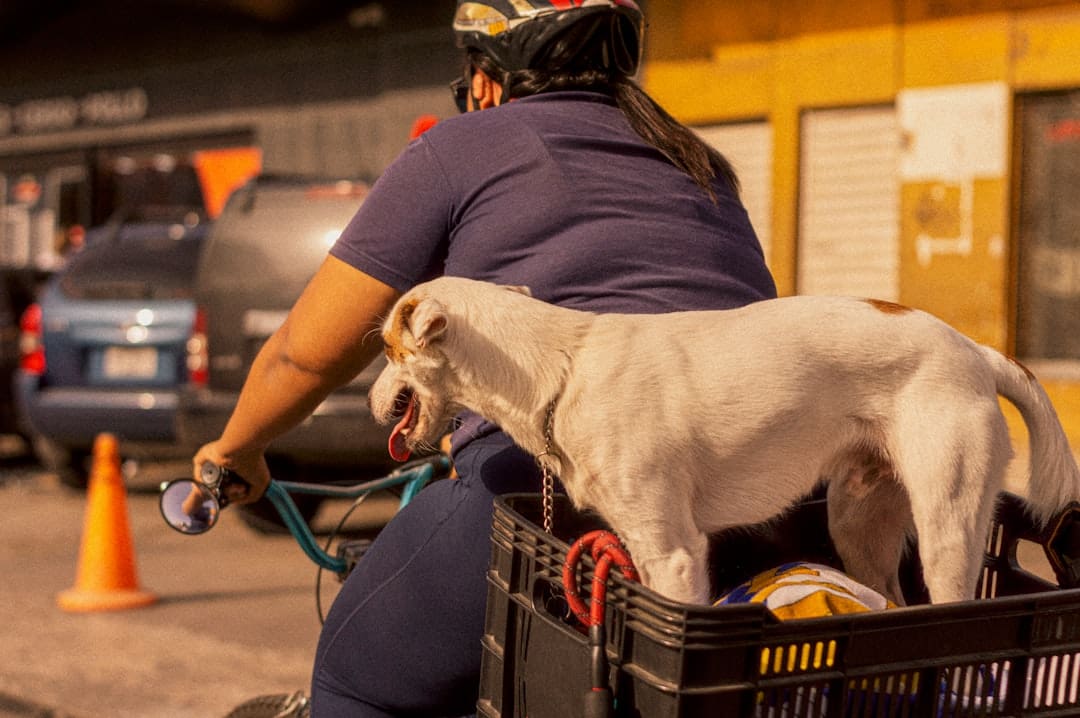
How to Train the Brace
The brace is the most physically demanding task in mobility work. Done correctly, it gives a handler a stable point of contact to push up from a seated position, regain balance after a stumble, or steady themselves while walking on uneven ground. Done incorrectly, it injures the dog's spine and joints over time.
Start with a properly fitted brace harness. Do not use a regular walking harness. A mobility brace harness has a rigid or semi-rigid handle set at the correct height for your specific handler-dog pairing. The handle height matters. Have a professional fitter measure the distance from the handler's palm to the floor when their arm hangs naturally at the side. That measurement guides handle height.
Begin with stationary loading. Ask your dog to stand squarely on all four feet. Reward that position heavily. Then place light downward pressure on the handle while the dog holds the stand. Increase pressure gradually over many sessions. The dog must learn that pressure on the handle is a signal to push back, not to move away or sit down.
Teach a verbal cue like "brace" or "steady" paired with a hand signal. Practice in short sessions of two to three minutes only. Never load a dog that is tired, distracted, or showing any sign of physical discomfort. Build duration slowly. A dog bracing correctly for 30 seconds under real handler pressure in week six is ahead of schedule.
Once the stationary brace is solid, work on moving transitions. The handler steps forward. The dog steps with them while maintaining contact and engagement with the handle. This takes weeks to build cleanly. Do not rush it. A dog that breaks position when the handler shifts weight is not ready for public access work in a brace role.
Forward Momentum Pull
Forward momentum assistance, sometimes called mobility pull or gait assistance, helps handlers who have enough balance to walk but not enough leg strength to initiate steps or maintain pace. The dog moves forward on cue and the handler uses that pull to help propel themselves forward.
Train this on a mobility harness with a front-pull attachment, not a standard leash. Ask the dog to "forward" or "let's go" and reinforce any forward movement. Shape this into a steady, controlled pull rather than a lunge. The dog should move at a consistent walking pace. A dog that surges and slows creates instability, not support.
Practice on flat surfaces first. Then introduce gentle inclines. A dog pulling a handler up a ramp needs to understand that slower and steadier is the goal. Reward sustained pace, not just initial movement. This task requires excellent leash manners as a foundation. A dog that pulls on leash for fun will confuse recreational pulling with task pulling. Train the distinction clearly.
Teaching Item Retrieval
Item retrieval is one of the most useful tasks for mobility-impaired handlers. A dog that can pick up a dropped phone, keys, medication bottle, or credit card eliminates dozens of painful or dangerous bending episodes every day. Train this task in three clean phases.
Phase one is the hold. Teach your dog to hold a specific object without mouthing or dropping it. Use a wooden dowel first. Reward the dog for holding it calmly in a closed mouth for increasing durations. Transfer this hold behavior to the actual target items once the mechanics are solid.
Phase two is the pick-up. Place the item on the floor. Cue "get it" or "pick up." When the dog picks it up, immediately reward with a high-value treat while the item is still in the dog's mouth. Do not let the dog drop the item and then reward. The reward comes during the hold, not after the drop.
Phase three is the delivery. The dog must bring the item to hand, not drop it at your feet. Train this by positioning yourself so the dog must come close to reach your hand. Reward only when the item is delivered directly into your palm. Over time, build distance. Then add the cue while the item is at a variety of locations and angles on the floor.
Named item retrieval, where the dog learns the specific word for different objects, is an advanced skill. Start with one item and its name. Only add a second item once the first is 90 percent reliable in varied locations. Handler safety depends on reliability. A dog that retrieves the wrong item in an emergency is not ready for that level of task work.
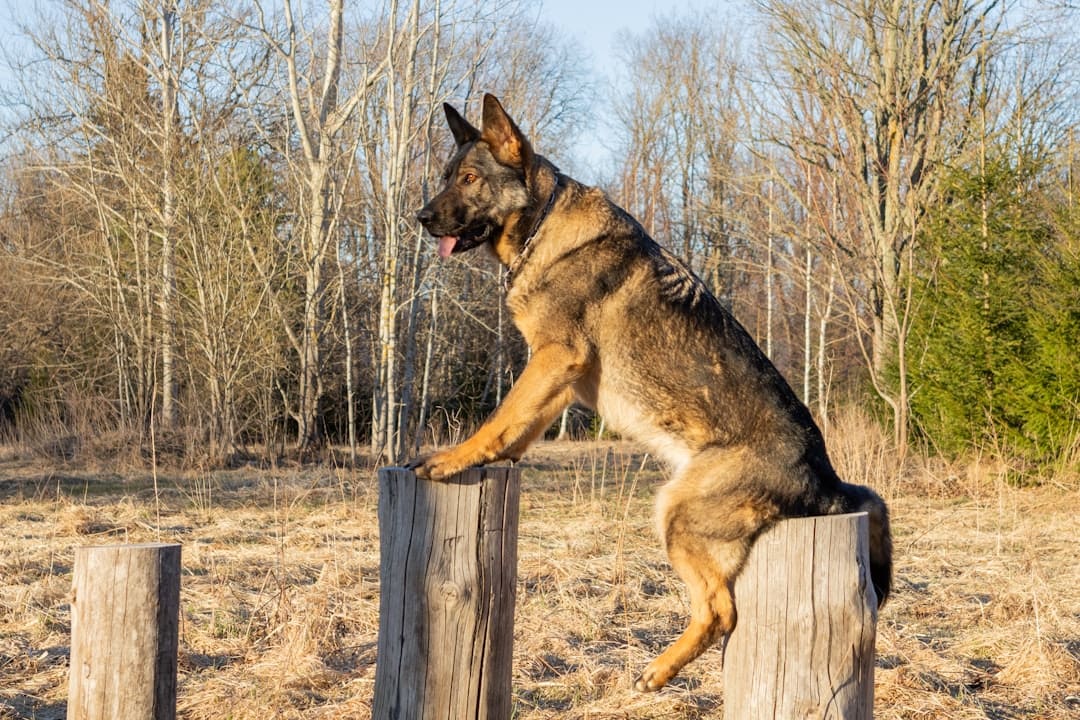
Doors, Drawers, and Light Switches
These tasks are often grouped together because they all involve the dog interacting with a fixed object in the environment rather than a dropped or handed item. The training mechanics are similar but each requires its own shape and cue.
For door opening, attach a fabric tug loop to the door handle. Teach the dog to grab and pull the tug. Start with cabinet doors or lightweight interior doors. Reward the dog for any rearward movement on the tug. Shape that into a full pull that swings the door open. The cue "open" or "tug" works well here. For pushing doors open, teach the dog to nose-target or paw-target a specific spot on the door. Build that into a sustained push. Button-activated handicap doors are easier to start with for pushes.
For drawer work, attach a tug to the drawer pull. The mechanics match door work. The key difference is that drawers require the dog to brace slightly against the furniture to generate pull force. Teach that foot placement separately if needed.
For light switches, teach a paw-target first. Place a sticky note on a wall at paw height and reward the dog for touching it with their paw. Transfer that to a light switch plate. Then shape the contact into enough force to actually flip the switch. This takes patience. Reward for any contact first, then only for contacts that move the switch. Many handlers use a rocker-style switch extender to make the target larger and easier for the dog to hit consistently.
Building a Reliable Task Chain
Individual tasks trained in isolation are not enough for real-world use. A mobility service dog must perform tasks on cue in unpredictable environments with distractions, crowds, and stress. Build reliability before adding complexity.
Use a task check system. Every week, run each task in a new location and at a new time of day. Log the results. A task that performs at 90 percent in your kitchen may drop to 60 percent in a grocery store. That gap is the training gap. Work in the environment where the dog struggles, not just where they succeed.
Build short task chains once each behavior is solid. Cue "brace" for a stand transfer, then "get it" for a retrieved item, then "tug" for a door. Practice the sequence in order. A dog that can execute a two-to-three task chain in a real-world setting is functioning at a genuinely high level.
Understand the core principles of service dog task training before you begin physical task work. Physical tasks carry real injury risk for both dog and handler when trained incorrectly. If you are new to mobility task training, work under the guidance of a skilled trainer before attempting brace work independently.
As a 501(c)(3) nonprofit healthcare provider, TheraPetic® Healthcare Provider Group is committed to giving handlers accurate, clinically sound education so that every working team is built on a foundation of safety and reliability. If you need documentation support or guidance on your path as a handler, reach out to our team at go.mypsd.org or call (800) 851-4390.
Written By
Ryan Gaughan, BA, CSDT #6202 — Executive Director
TheraPetic®® Healthcare Provider Group • About • LinkedIn • ryanjgaughan.com
Clinically Reviewed By
Dr. Patrick Fisher, PhD, NCC, BC-TMH, C-AAIS — Founder & Clinical Director • The Service Animal Expert™
Editorial Review
This article was reviewed by Dr. Patrick Fisher, PhD, NCC, BC-TMH, C-AAIS on May 8, 2026 for accuracy, currency, and clarity. Content is updated when laws or guidance change.