

The Size Myth That Needs to Go Away
Walk into a grocery store with a Chihuahua in a service dog vest and you will feel every eye in the room. Most people assume service dogs are large. German Shepherds. Golden Retrievers. Labs. The image is so fixed in the public mind that a small dog wearing a vest feels wrong to them.
It is not wrong. It is just unfamiliar. And that unfamiliarity costs real handlers real access every single day.
Small breed service dogs are legitimate working animals. They perform tasks that directly mitigate a handler's disability. They go through the same training process. They carry the same legal standing. The only thing they lack is size. And size is rarely what makes a service dog effective.
What the Law Actually Says About Dog Size
Under the Americans with Disabilities Act, a service dog is defined by what it does. Not by what it looks like or how much it weighs. The ADA does not specify breed, size, or weight. A three-pound Papillon trained to alert to an oncoming seizure has the same legal standing as a ninety-pound Labrador trained to do the same work.
Businesses and housing providers cannot deny access based on size alone. Under the Fair Housing Act, housing providers must make reasonable accommodations for service animals and support animals regardless of breed or size restrictions in their lease agreements. The law is clear on this point.
What a business or handler may be asked is simple: Is the dog a service animal required because of a disability? What work or task has the dog been trained to perform? Those are the only two permitted questions under current federal guidance from the Department of Justice. Size is not on that list.
For a plain-language breakdown of your public access rights as a handler, visit the ADA public access guide on Service-Dog.org.
Real Tasks Small Breed Service Dogs Perform
This is where the conversation gets specific. People hear "small dog" and assume decorative. Let's dismantle that assumption with concrete examples.
Psychiatric Alert and Response Tasks
Small dogs are exceptional at psychiatric work. Their size makes them naturally attuned to the body language of a person seated nearby. A Miniature Poodle or a Toy Fox Terrier can be trained to detect elevated cortisol responses. The physical signals your body sends before a panic attack hits. They alert by pawing, nudging, or placing their chin on the handler's lap.
They can also perform room searches for handlers with PTSD, checking a space before the handler enters and returning to signal clear. The size of the dog has no bearing on this task. The nose and the training do the work.
Medical Alert Tasks
Scent-based alert work is arguably the area where small dogs shine brightest. Diabetic alert, cardiac event alert, and migraine prodrome alert all rely on the dog's olfactory system. One of the most powerful biological tools on the planet, regardless of the dog's frame.
A Beagle, technically a small-to-medium breed, has been used in medical detection research for decades because of scent sensitivity. Many small breeds share that same olfactory depth. Train the behavior chain correctly and a small dog can alert with the same reliability as a large one.
Mobility Support for Smaller Handlers
Traditional mobility work, bracing, counterbalance, pulling a wheelchair, does require a dog large enough to bear weight. No responsible trainer will tell you otherwise. But not every mobility task requires force. A small dog can retrieve dropped items, press accessible door buttons, carry a light medical bag, and activate alert systems. For handlers with limited hand strength or reach, those tasks are genuinely life-changing.
Sensory Grounding and Interruption Tasks
For handlers managing dissociative episodes, self-harm urges, or severe anxiety spirals, a small dog in the lap provides immediate tactile grounding. The warm weight, the movement, and the need to respond to the dog pulls the nervous system back toward the present. This is not comfort. It is an interruption task, and it is valid.
Breeds That Excel in Service Work
Not every small breed is suited for service work. Temperament, trainability, stress tolerance, and focus are the real criteria. Here are the breeds our clinical and training teams see succeed consistently.
Miniature Poodle
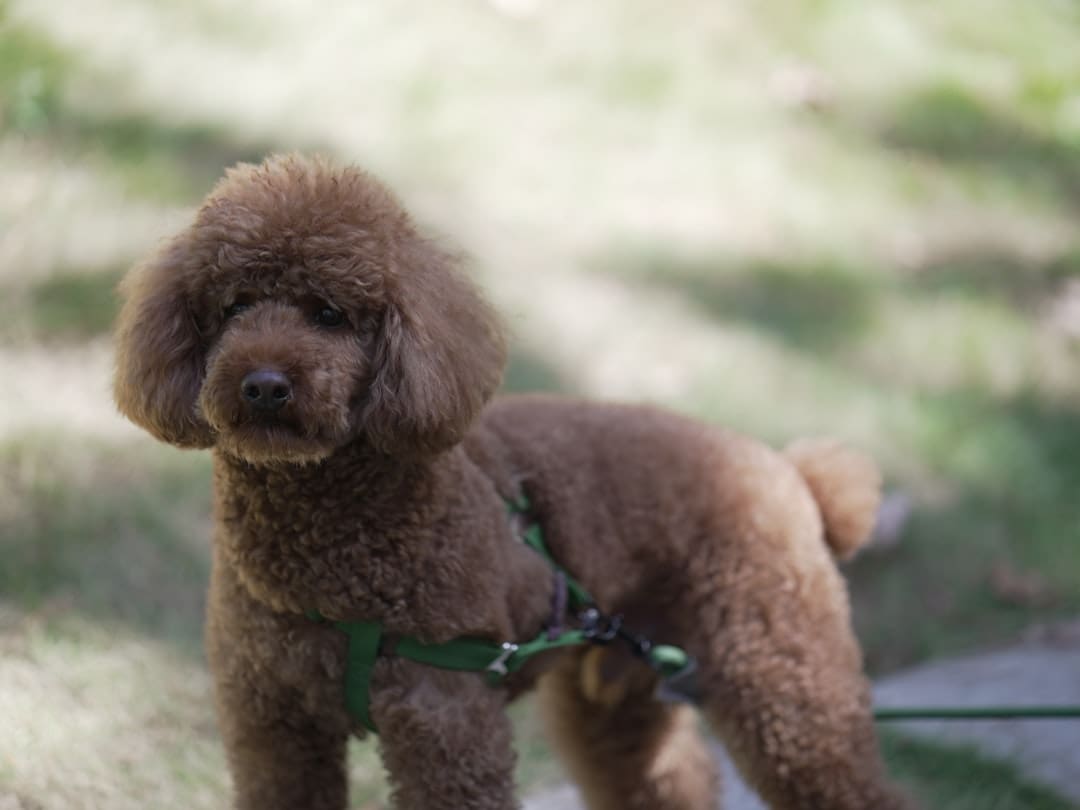
The Miniature Poodle is one of the most trainable dogs alive, regardless of size category. High intelligence, low shedding, strong focus, and a biddable nature make this breed a top performer in psychiatric and medical alert roles. Do not let the grooming fool you. This is a serious working dog in a compact frame.
Papillon
The Papillon is underestimated constantly. These dogs are alert, fast learners with a strong desire to work with their handler. Their size makes them ideal for lap-based grounding tasks and alert work in tight public spaces like offices, theaters, or transit vehicles.
Pembroke Welsh Corgi
The Corgi sits at the larger end of the small breed category. It brings a herding dog's attentiveness and a calm enough temperament for public access. Corgis have been successfully trained for diabetic alert and psychiatric response tasks. Their low center of gravity actually aids stability in certain tasks.
Rat Terrier and Miniature Schnauzer
Both breeds offer high focus and a working-dog drive that many toy breeds lack. They respond well to task training and hold up behaviorally in stimulating public environments. If you want a small dog that acts like it is on the job, because it genuinely is, look here.
Cavalier King Charles Spaniel
The Cavalier's gentle, attuned temperament makes it exceptional for psychiatric service work. These dogs are naturally body-aware and emotionally responsive. Handlers dealing with PTSD, major depressive disorder, or severe anxiety often find Cavaliers mirror and respond to shifts in their emotional state with striking accuracy.
DPT and Lap-Sized Handlers: A Closer Look
Deep Pressure Therapy, commonly called DPT, is one of the most frequently discussed tasks for psychiatric service dogs. The standard image is a large dog draped across a handler's chest or legs. For many handlers, that image is accurate and helpful.
For others, it is not the right fit. Children, petite adults, wheelchair users, and handlers who spend most of their time seated can receive effective DPT from a dog that fits comfortably in the lap. The therapeutic mechanism is the same: firm, sustained pressure that activates the parasympathetic nervous system and reduces acute anxiety responses.
A ten-pound dog applying pressure to the lap of a seated child experiencing a meltdown is performing legitimate DPT. Do not let anyone tell you the dog has to weigh forty pounds to do the job. The task definition is about the behavior and the therapeutic outcome. Not the weight of the animal delivering it.
Handlers interested in how psychiatric tasks are evaluated and documented can start at the TheraPetic® screening process, where our Licensed Clinical Doctors assess psychiatric need and task alignment for each individual handler.
How to Handle Public Skepticism With Confidence
You will face doubt. Accept that now and prepare for it so it does not catch you off guard in the moment.
When a store employee or a stranger questions whether your small dog is "really" a service dog, stay calm and factual. You are not required to prove anything beyond answering the two permitted ADA questions. Practice your answers aloud so they come out clean under pressure.
Try this: "Yes, my dog is a trained service dog. She alerts to my medical condition and performs specific tasks I need to manage my disability." That is all you owe them. You are not required to name your diagnosis. You are not required to show paperwork. You do not have to defend your dog's breed or size.
Carry yourself like the law is on your side. Because it is. If a business refuses access and you believe your rights have been violated, document the incident and file a complaint with the Department of Justice Civil Rights Division. That is the process. Know it and use it.
What you should not do is engage in an extended argument on the floor of a hardware store. State your position once. Offer the two-question framework. If they persist in denying access unlawfully, leave, document, and report. Save your energy for your dog and your day.
Training Considerations Specific to Small Dogs
Small dogs face some training challenges that large dogs do not. Acknowledge them and train through them.
First, small dogs fatigue differently in public access environments. Floors are loud, feet are everywhere, and everything is at eye level or above. Watch your dog's stress signals. A dog that is craning its neck constantly, shaking in a carrier, or scanning the environment with wide eyes is not performing tasks. It is surviving. Build public access duration gradually.
Second, socialization must be deliberate. Expose your small breed puppy or dog-in-training to large crowds, loud noises, elevators, escalators, tile floors, and people in uniforms. The same socialization checklist applies regardless of size. Do not skip this because the dog is small. A poorly socialized small dog in a public setting is a liability and an embarrassment to every handler who came before you.
Third, task reliability under distraction is non-negotiable. A small dog that only performs its alert behavior at home in a quiet room is not a service dog. It is a pet with one trained behavior. Proof every task in real-world environments before calling that dog a trained service animal. Your safety depends on it.
Use high-value reinforcers during public access training. Keep sessions short and end on success. Teach a solid "leave it" and a reliable "under" so your dog can work quietly beneath a restaurant table or aircraft seat without reacting to every stimulus.
Getting Started With a Small Breed Partner
If you are selecting a small breed puppy for service work, prioritize temperament evaluation above everything else. Look for a puppy that recovers quickly from startles, shows curiosity rather than fear when exposed to new objects, and engages willingly with strangers. Those traits matter more than pedigree.
Work with a trainer who has direct experience with small breed service dogs. Not just experience with service dogs in general. Small dogs require adjustments in handling mechanics, reinforcement delivery, and public access protocols. A trainer who has only worked with large breeds may not recognize the specific stress signals or ergonomic challenges that come with a ten-pound working dog.
As a 501(c)(3) nonprofit healthcare provider, TheraPetic®'s mission is to make sure every person who needs a support animal or service dog gets accurate clinical guidance. Regardless of their dog's size, breed, or background. Our Licensed Clinical Doctors work with handlers across the full spectrum of psychiatric and medical need, and we understand that the right dog for one person may look nothing like the right dog for another.
If you are unsure whether a small breed service dog fits your disability-related needs, reach out to our team at help@mypsd.org or call (800) 851-4390. We will give you a straight answer based on your actual situation.
Ready to take the next step? Visit go.mypsd.org to connect with a Licensed Clinical Doctor who can evaluate your needs and help you understand what task training should look like for your specific condition and your specific dog.
Written By
Ryan Gaughan, BA, CSDT #6202 — Executive Director
TheraPetic® Healthcare Provider Group • About • LinkedIn • ryanjgaughan.com
Clinically Reviewed By
Dr. Patrick Fisher, PhD, NCC — Founder & Clinical Director • The Service Animal Expert™
Editorial Review
This article was reviewed by Dr. Patrick Fisher, PhD, NCC on August 5, 2026 for accuracy, currency, and clarity. Content is updated when laws or guidance change.