



Service Dog Requirements, Training & Public Access — Complete Guide
An evidence-based, practical guide for handlers, trainers, and service providers — approachable, clear, and up to date.
Quick overview
A Service Dog is defined by what it does — not by a vest, ID card, or registration. This guide explains the legal basics (ADA, FHA, ACAA), the training paths, the Public Access Test (PAT), documentation best practices, and practical steps to reduce conflicts and protect access rights.
- Understand who qualifies for a Service Dog
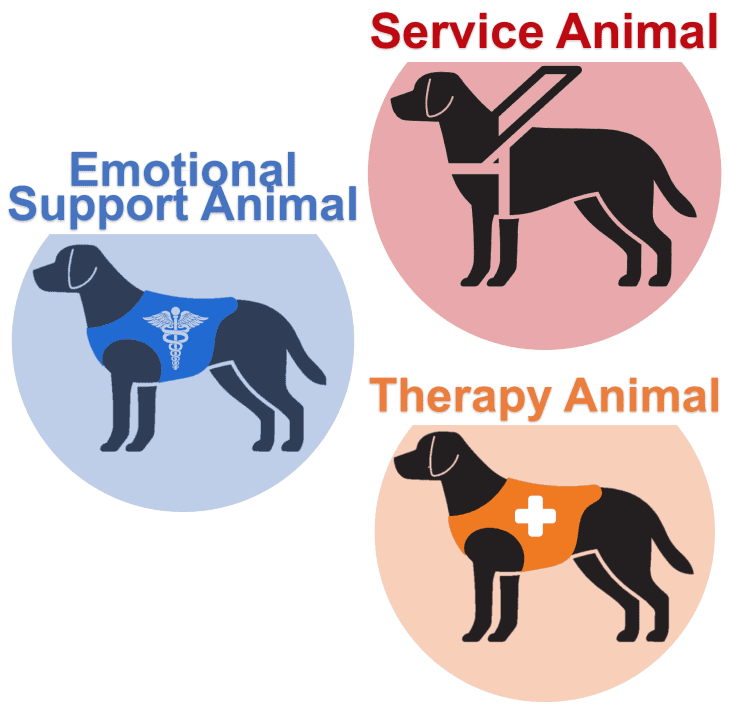
- Know the difference between Service Dogs, ESAs, and therapy animals
- Prepare for the Public Access Test and gather documentation


Full guide — what you need to know
The legal definition — what makes a dog a “Service Dog”?
At its core: a Service Dog is individually trained to perform one or more tasks that directly mitigate a person’s disability. The animal’s role — the task — is the foundation of legal access rights. A vest, ID or certificate does not create rights by itself.
- ADA: Governs public access and defines service animals as dogs trained to perform tasks for people with disabilities.
- FHA: Applies to housing accommodations and has different rules for ESAs and service animals.
- ACAA: Governs air travel policies for service animals and has airline-specific documentation rules.
- EEOC: Governs workplace reasonable accommodations.
Note: This page summarizes the practical implications of those laws. It is not legal advice. For disputes or complex legal questions, consult a lawyer experienced in disability rights.
Who qualifies as a handler?
To qualify, the person must have a disability — that is, a physical or mental impairment that substantially limits one or more major life activities — and the dog must be trained to perform a task that directly addresses that impairment.
Examples include mobility impairments, visual impairment, seizure disorders, severe allergies, psychiatric disabilities (PTSD, panic disorder), and diabetes requiring alerting to blood sugar changes.


Two common training pathways
There are two widely used routes to develop a reliable service dog partnership:
- Program-trained (Organization): Dogs raised and trained by accredited non-profit or professional organizations. Pros: standardized curriculum, documented training, team match. Cons: waitlists, cost.
- Owner-trained (Handler-led): Handlers or contracted professional trainers train the dog to perform tasks tailored to the handler. Pros: personalized, often faster; Cons: requires rigorous documentation and demonstrated public reliability (PAT).
Either route is valid. The key is task reliability and public behavior.


Public Access Test (PAT) — what it is and how to prepare
The PAT is a practical exam that shows the dog can behave and perform tasks reliably in public. Passing a PAT is the clearest evidence a handler can present when access is questioned.
Core PAT domains:
Dog enters calmly, waits when asked, ignores distractions.
Dog maintains task or position with low-level distractions.
No excessive barking, jumping, or aggressive behavior.
Dog reliably performs the target task(s) on cue in a public setting.
Dog navigates tight spaces, doors, elevators, and busy walkways.
Dog appears healthy, groomed, and free of obvious parasites or illness.
Simple PAT mini-checklist (for handlers)
- Can your dog sit/stay near a table while you eat for 10–15 minutes?
- Can your dog ignore another dog or person passing within 6–8 feet?
- Will your dog perform the task reliably on command in a busy environment?
- Can you control your dog without continuous treats or physical guidance?
Tip: Practice in progressively busier locations. Record a short video of your dog performing tasks and behaving in public — this is strong supporting evidence if access is challenged.
Typical tasks: seen vs. unseen disabilities
Seen (observable) tasks: guiding the visually impaired, bracing for transfers, retrieving dropped items, opening doors, pulling a wheelchair (where appropriate), or balance assistance.
Unseen (non-observable) tasks: interrupting repetitive behaviors, deep pressure therapy for panic attacks, alerting to blood sugar changes or seizure onset, medication reminders, or nudging to interrupt dissociation.
When describing a task to staff, be clear and concise: e.g., “My dog provides deep pressure therapy during panic attacks” — not “my dog provides emotional support.”

Documentation: what helps and what doesn’t
No federal law requires registration or ID for Service Dogs. However, professional, consistent documentation makes access smoother and helps with landlords, airlines, and employers.
Recommended documents
- A concise training letter that lists the tasks the dog performs, the trainer/organization name, and contact info (if applicable).
- A PAT certificate or written assessment from a recognized trainer.
- Basic veterinary records showing vaccinations, spay/neuter status where relevant, and general fitness to travel.
- Clear, professional photos of the dog working (optional but helpful).
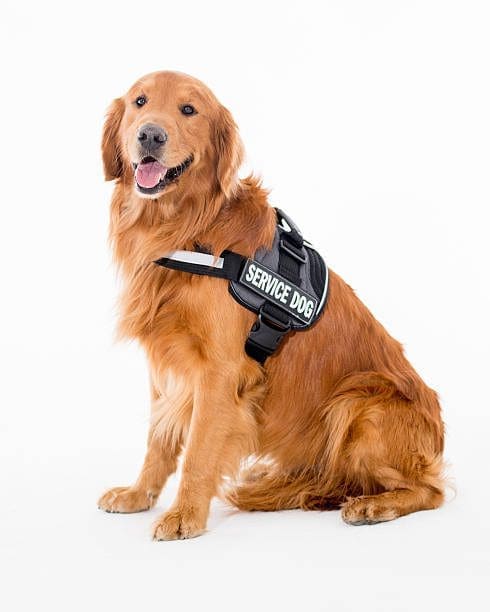
Avoid claims of “certification” from sites that sell generic IDs or registration certificates — these do not create legal rights and can mislead handlers and staff.

How to spot and avoid certification scams
Beware of vendors who promise “federally recognized” or “official” service dog registrations. There is no federal registry for ADA service dogs. Typical red flags:
- “Official” seals or badges for sale with no verification process.
- Instant “certificates” after a short online form or payment.
- Sites that imply legal protections beyond what ADA, FHA, or ACAA provide.
Good practice: keep clear training records, PAT evidence, and a trainer’s written assessment — these are verifiable, meaningful, and can be checked by third parties.
Housing, air travel, and employment — quick practical notes
Housing (FHA): Landlords must consider reasonable accommodations for service animals and, in many cases, emotional support animals. Documentation requests should be reasonable and limited to who is requesting a reasonable accommodation.
Air travel (ACAA): Airlines have policies for service animals and may require documentation and advance notice. Rules have changed in recent years; always check the airline’s current policy before flying.
Employment (EEOC): Employers must provide reasonable accommodations unless it imposes undue hardship. Reasonable accommodations may include allowing a Service Dog in the workplace under defined conditions.
What to say (and not say) when staff ask questions
Under ADA public access rules, staff may ask only two questions when it is not obvious the animal is a service dog:
- “Is the dog required because of a disability?”
- “What work or task has the dog been trained to perform?”
Do not volunteer medical details. Keep answers short and task-focused. Example script: “Yes. The dog provides mobility support — it braces to assist me standing.”
If a staff member asks for documentation, it is often helpful to offer a concise training letter or PAT certificate — avoid giving medical records.
Frequently asked questions
Q: Do service dogs need a vest or ID?
A: No. Vests and IDs are helpful for public understanding, but they do not create legal rights.
Q: Can my landlord require proof?
A: Under FHA, landlords may request documentation to verify the need for accommodation in some situations, but they cannot demand unnecessary medical records.
Q: What if my dog is asked to leave?
A: If a business asks you to remove the dog due to behavior, ask for the reason and correct behavior if possible. If asked to leave because staff claim “no pets,” calmly explain the animal is a service dog and state the task it performs. Keep records of incidents and consider contacting your local disability rights organization or legal counsel if discrimination persists.
Support our work — we are 100% donor supported
Your contributions make it possible for Service-Dog.org to provide free education, accessible templates, training guidance, and advocacy resources to handlers and trainers nationwide. Donations help fund:
- Free downloadable templates (training letter, PAT checklist)
- Community training scholarships and low-cost PAT assessments
- Advocacy and educational outreach to reduce access discrimination
If this guide helped you, please consider a gift — every contribution supports real service dog partnerships.
Donate to Support Service-Dog.orgTax-deductible receipts and donor options are available on our donation page.
Practical next steps — checklist
- Create a concise training summary that lists tasks and training provider.
- Practice PAT scenarios in public and record evidence.
- Assemble vet records and a short PAT/trainer assessment.
- Learn scripts for staff interactions and keep them on a note card (physical or phone).
- Consider a low-cost “pre-notification” to airlines or landlords when appropriate.
Resources & credits
Authoritative resources include ADA.gov, the U.S. Department of Transportation (air travel rules), and HUD guidance for the Fair Housing Act. For training, seek organizations accredited by reputable national bodies and check trainer credentials and references.
If you need templates (training letter, PAT checklist, trainer assessment), we provide downloadable templates through our screening process.